Tuesday, April 9, 2024

Embracing AI for Smarter Surveillance


In recent years, the landscape of CCTV and video surveillance has undergone a significant transformation, largely driven by advancements in artificial intelligence (AI) technology. Gone are the days of passive monitoring; today's CCTV systems are intelligent, proactive, and capable of delivering actionable insights in real-time.

One prominent trend shaping the future of surveillance is the integration of AI algorithms into CCTV cameras. These intelligent systems can analyze video feeds, detect anomalies, and alert security personnel to potential threats before they escalate. This proactive approach empowers businesses to enhance security measures and achieve greater peace of mind.

Moreover, AI-driven analytics enable CCTV cameras to go beyond simple surveillance by providing valuable data insights. Retailers, for instance, can leverage this technology to analyze customer behavior, track foot traffic patterns, and optimize store layouts for better customer engagement. Looking forward, the integration of AI into CCTV systems is poised to continue evolving, with advancements in deep learning algorithms and edge computing enabling even more sophisticated capabilities.

Tuesday, July 4, 2023

AI in CCTV Surveillance Systems


Before artificial intelligence (AI) became ubiquitous in the market due its invaluable contribution to improving business processes and increasing efficiency, it has since played a significant role in the field of Closed Circuit Television (CCTV) surveillance systems. Here are some ways AI is used in CCTV: 

  1. Object detection and tracking: AI algorithms can analyze video footage from CCTV cameras to detect and track objects of interest such as vehicles, people, or specific objects. This enables real-time monitoring and alerts for potential security threats or suspicious activities.
  2. Facial recognition: AI-powered facial recognition algorithms can identify and match faces against watchlists or databases. This technology is useful for enhancing security by identifying known individuals, tracking persons of interest, or detecting unauthorized access.
  3. Behavior analysis: AI algorithms can learn and recognize patterns of behavior, such as loitering, crowd formation, or abnormal movements. This allows CCTV systems to automatically identify and flag unusual activities for further investigation.
  4. Anomaly detection: By training AI models on normal behavior patterns, CCTV systems can identify and highlight abnormal events or activities. For example, if a person suddenly starts running in a restricted area, the AI system can raise an alert for security personnel to respond. 
  5. Automated alerts and notifications: AI-powered CCTV systems can automatically generate alerts or notifications based on predefined rules or triggers. These alerts can be sent to security personnel or relevant authorities, ensuring timely response to potential security incidents. 
  6. Smart video analytics: AI algorithms can analyze video content to extract useful information. For instance, they can count the number of people in a specific area, estimate crowd density, detect abandoned objects, or identify traffic flow patterns. These analytics provide valuable insights for security management, crowd control, or urban planning.
  7. Predictive analytics: By analyzing historical data and combining it with real-time information, AI algorithms can make predictions about potential security threats or incidents. This helps in proactive security management and resource allocation.
  8. Post-event analysis: AI algorithms can assist in post-event analysis by quickly reviewing and indexing vast amounts of video footage. This enables investigators to search for specific objects, persons, or events, saving time and effort in manual review.

While AI brings many benefits to CCTV surveillance systems, there are also concerns regarding privacy, data security, and potential biases that need to be taken into account. It is crucial to always observe proper implementation and adherence to ethical guidelines to ensure the responsible and effective use of AI in CCTV.

Friday, August 25, 2017

Protect Your Home with More Than Just Locks and Bolts


Smart Door Lock

Intelligent Door Lock Controller

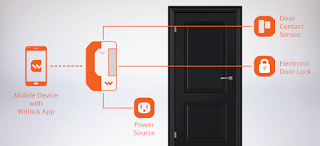
Enhance the security and convenience of your home by integrating an intelligent door lock controller, which can be accessed remotely through a smartphone application. This modern approach to home security leverages the power of the Internet of Things (IoT) to provide comprehensive protection and ease of use. By connecting your door lock to a smartphone app, you gain the ability to monitor and control access to your home from anywhere, at any time.

CONTROL via SMARTPHONE

One of the standout features of an intelligent door lock controller is the ability to unlock your door with just a tap on your smartphone. This feature is particularly useful when you have guests arriving and you're not at home, or if you've forgotten your keys. The convenience of being able to unlock your door remotely eliminates the need for physical keys and allows you to grant access to your home without any hassle.

COST EFFICIENT

Using your smartphone as a virtual key not only enhances convenience but also proves to be cost-efficient. Traditional locks often require duplicate keys for family members, guests, or service providers, which can be an added expense and a hassle to manage. With an intelligent door lock controller, you can eliminate the need for physical duplicates. Your smartphone becomes your key, and you can easily grant or revoke access through the app, saving both time and money.

HIGH SECURITY

Security is a top priority for any home, and an intelligent door lock controller offers high-level security features. The system is integrated with sensors that trigger alarms in case of any suspicious activity. If a sensor is triggered, you'll receive instant notifications on your smartphone, allowing you to take immediate action. In the event of a break-in, the built-in siren can alert your family and deter potential intruders. This real-time alert system provides peace of mind, knowing that your home is protected even when you're not there.

Moreover, the intelligent door lock controller can be part of a larger home security system, connecting with other IoT devices to create a comprehensive security network. This integration ensures that all aspects of your home’s security are covered, from doors and windows to motion detectors and surveillance cameras.

In conclusion, incorporating an intelligent door lock controller into your home security setup offers significant advantages in terms of convenience, cost-efficiency, and high-level security. By using your smartphone as a virtual key, you simplify access management and enhance your home’s security, ensuring a safer and smarter living environment.

Search This Blog